Digital Identity Infrastructure Strengthens in 2026 with Passwordless Authentication, Digital Wallets & Trusted Identity Frameworks
Digital identity infrastructure continues advancing in 2026 as governments, financial institutions, technology companies, and enterprises strengthen authentication, identity governance, and trusted digital ecosystems. Once focused primarily on user verification, digital identity has become foundational infrastructure supporting payments, commerce, public services, healthcare, and enterprise operations. Passwordless authentication, digital identity wallets, verifiable credentials, and interoperable identity frameworks are enabling more secure and efficient digital interactions while supporting stronger digital trust.
Digital Identity Becomes Core Infrastructure
Digital identity is increasingly viewed as more than a cybersecurity capability. Organizations are adopting platforms that combine authentication, credential verification, authorization, and governance within unified environments, supporting secure access across cloud services, enterprise systems, financial institutions, and government platforms.
Governments continue expanding national digital identity initiatives. Programs such as the European Digital Identity Wallet, Aadhaar, India Stack, MOSIP, and Singpass illustrate how digital identity now supports financial inclusion, digital public services, and secure credential sharing. Meanwhile, standards such as the W3C Verifiable Credentials framework are improving interoperability by enabling trusted credentials to be exchanged across organizations and jurisdictions.
Passwordless Authentication Gains Momentum
Organizations continue reducing reliance on passwords by adopting passkeys, biometrics, and phishing-resistant authentication methods that improve both security and user experience.
According to the FIDO Alliance, 90% of surveyed consumers were familiar with passkeys in 2026, while 75% had enabled them for at least some online accounts, demonstrating that passwordless authentication has expanded beyond early adoption.
For enterprises, passwordless authentication supports phishing resistance, operational efficiency, improved user experiences, and regulatory compliance, although most organizations continue using hybrid authentication environments.
Enterprise Identity Platforms Continue Expanding
Demand is increasingly shifting from standalone identity verification tools toward integrated platforms that manage the entire identity lifecycle. Modern solutions combine identity verification, authentication, access management, governance, fraud prevention, and orchestration while supporting employees, customers, partners, and machine identities across hybrid environments.
Identity governance is also becoming more important as organizations strengthen compliance and operational resilience. Guidance from organizations including NIST, ENISA, and the OpenID Foundation emphasizes centralized oversight and policy-based identity management across increasingly complex digital ecosystems.
Digital Identity Supports Payments and Commerce
Digital identity infrastructure is becoming an increasingly important component of payment and financial ecosystems. Financial institutions and payment providers rely on trusted identity to support customer onboarding, authentication, fraud prevention, and regulatory compliance.
The continued expansion of open banking and open finance is reinforcing this trend by enabling secure authentication and trusted data sharing between banks, fintech providers, and third-party service providers. Identity infrastructure also supports Know Your Customer (KYC), Know Your Business (KYB), merchant verification, and ongoing monitoring, improving compliance while creating more efficient digital customer journeys.
Identity Security Remains a Strategic Priority
As digital services continue expanding, organizations face increasingly sophisticated identity-related threats, including credential abuse, phishing, synthetic identities, AI-generated deepfakes, and social engineering attacks.
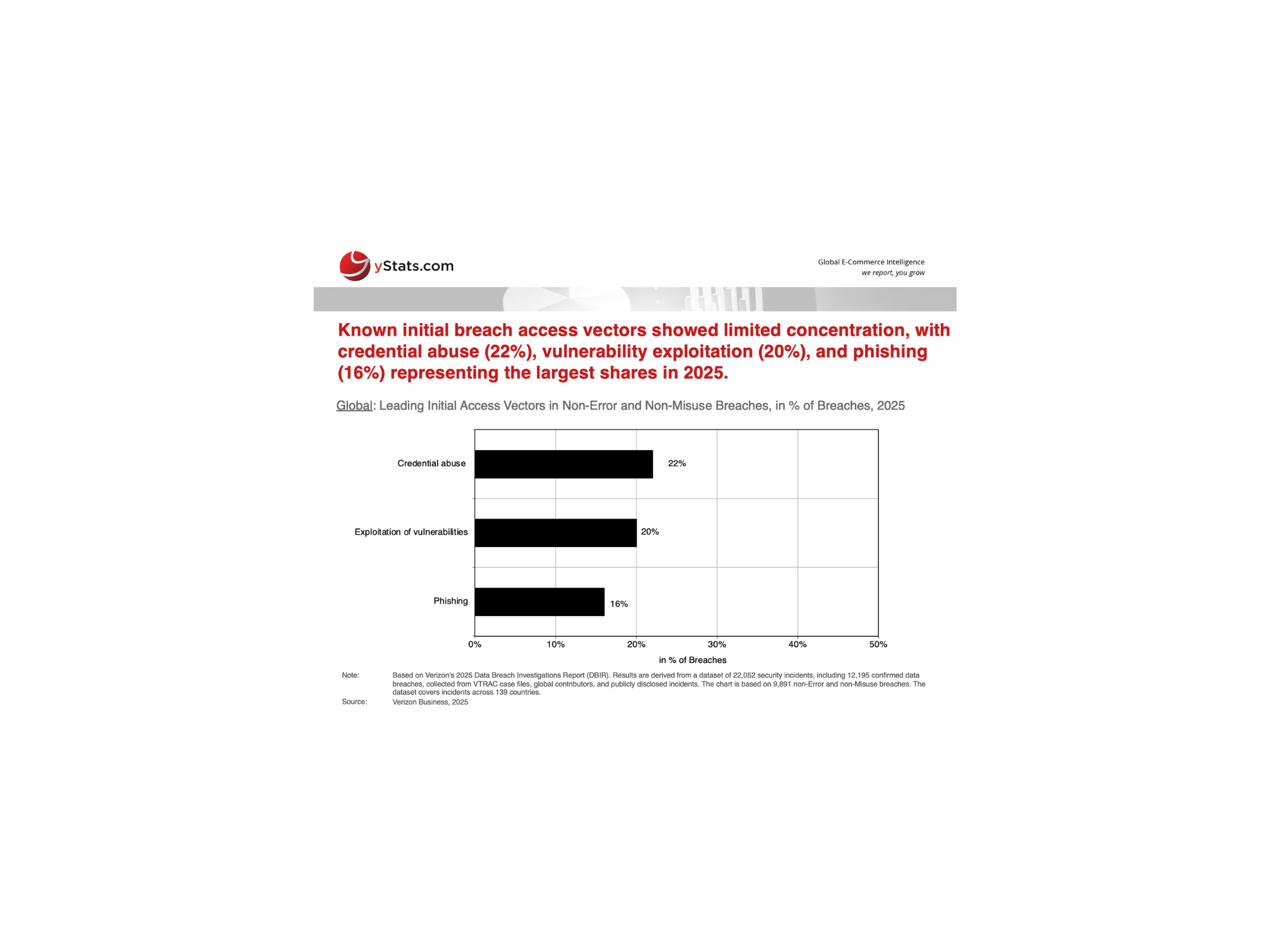
According to Verizon Business, credential abuse accounted for 22% of leading initial access vectors in non-error and non-misuse breaches during 2025, followed by vulnerability exploitation at 20% and phishing at 16%. In response, organizations are increasingly combining biometric authentication, behavioral analytics, adaptive authentication, and continuous monitoring to strengthen digital trust beyond initial identity verification.
The Next Phase of Digital Identity
Digital identity infrastructure continues expanding beyond human users to include connected devices, autonomous systems, and AI-powered services. As machine identities become more common, organizations are developing governance frameworks capable of managing trusted interactions between both people and machines.
Long-term resilience is also becoming a growing priority. Governments, standards organizations, and technology providers are evaluating quantum-resistant cryptography while continuing to advance interoperable identity wallets, reusable credentials, and decentralized trust frameworks designed to support secure cross-border digital interactions.
Digital identity is therefore becoming foundational infrastructure for modern digital economies. As organizations continue investing in authentication modernization, interoperable credentials, governance, and trusted identity ecosystems, digital identity will play an increasingly central role in enabling secure access, digital commerce, financial services, and public-sector transformation throughout the remainder of the decade.